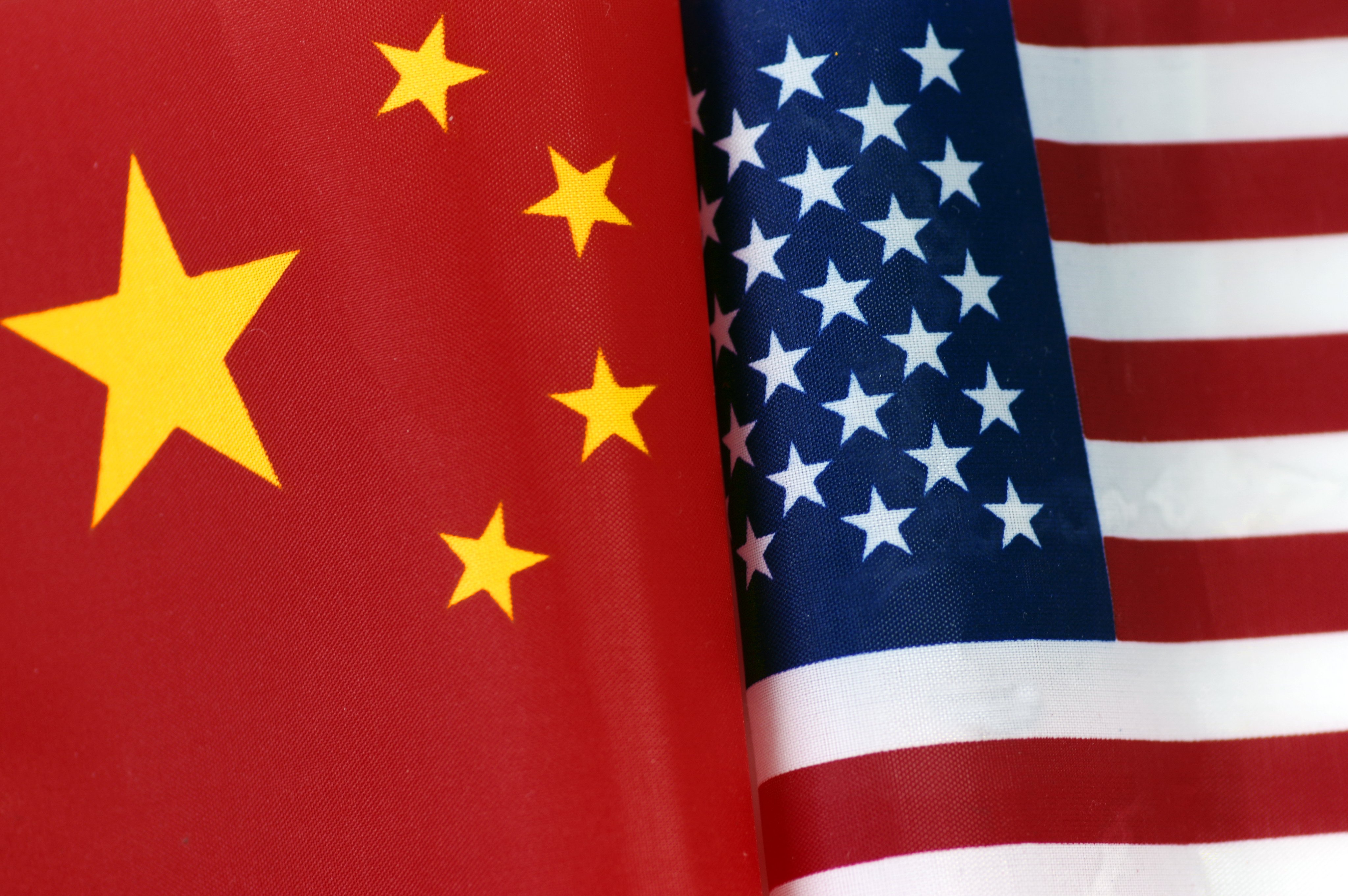
 US-China
The decision by the US House of Representatives on Monday to overwhelmingly (340-54) extend the trade pact for a further three years reflects a strategic recalibration by Washington in the face of China's deepening economic and diplomatic engagement with Africa.
As China cements its role as Africa's largest trading partner, financier and infrastructure builder, the US has found itself increasingly exposed, especially under the Donald Trump administration.
Through his "America First" domestic and foreign policy, President Trump has rolled back critical aid programmes and withdrawn from key UN and other multilateral institutions that mostly deal with problems in the Global South, particularly Africa.
While the proposed extension will now head to the Senate, the vote by the House of Representatives sent a signal of Washington's deliberate push to continue engaging Africa economically,. This is in the face of the geopolitical rivalry with China, the second biggest global economic power.
AU Commission Chairperson Mahmoud Ali Youssouf welcomed the move, describing AGOA as "a cornerstone of US–Africa economic relations" that has supported industrialisation, job creation and regional value chains across the continent.
"For over two decades, AGOA has served as a bridge for economic cooperation and a symbol of enduring friendship between Africa and the American people," Youssouf said in a statement.
He added that the vote reflected the enduring commitment of the US to strengthening trade, investment, and shared prosperity with African economies.
But the extension comes amid strained relations between the US and African states in recent past, with recent visa freezes affecting relations.
The withdrawal of US development assistance through USAID and additional tariffs have weakened America's influence in the continent.
This, coupled with withdrawal from the key UN agencies that deal with peace and stability, health, development and humanitarian crises have further widened the gap with African states.
China, on the other hand, has moved aggressively into that space.
Other than granting all 53 African states with formal ties to Beijing "zero-tariff treatment for 100% of tariff lines," China has through concessional loans, infrastructure projects, and diplomatic consistency endeared itself to various capitals in Africa.
Beijing has positioned itself as a long-term partner to Africa without conditions, citing its non-interference foreign policy and mutual friendship.
Its announcement at the 2025 FOCAC of duty-free and quota-free market access for African goods further underlined this shift, even as the benefits initially favoured least developed countries.
For Washington, AGOA now remains one of the few foreign policy tools left to counter China's economic push.
Kenya's response to the AGOA extension illustrates why the US could ill-afford to let the programme lapse.
Prime Cabinet Secretary and Foreign Affairs CS Musalia Mudavadi welcomed the House vote, saying Nairobi remained "firmly committed to deepening the ties between our two nations."
However, Mudavadi reiterated that discussions with US officials had focused on advancing the bilateral Kenya–US Strategic Partnership to cover trade and investment, peace and security, democracy and governance, health cooperation, and multilateral priorities.
The emphasis on trade is critical. Unlike China's state-driven model, AGOA has helped integrate African economies into global value chains, especially in manufacturing and apparel, offering an alternative development pathway.
Trade CS Lee Kinyanjui said the extension removes uncertainty that had threatened Kenya's export-oriented sectors.
The textile and apparel industries within the Export Processing Zones employ more than 80,000 people directly and a further 250,000 indirectly, most of them reliant on duty-free access to the US market.
"The uncertainty that had previously engulfed the sector will now give way to renewed confidence and expansion," Kinyanjui said.
Yet even as Kenya welcomed the AGOA reprieve, CS Kinyanjui a day after announced Nairobi has secured an "early harvest" preliminary trade arrangement with China that grants 98.2 per cent zero-duty market access for Kenyan goods.
The negotiations for the bilateral trade agreement, Kinyanjui noted, seeks to have a deal that aligns with the privileges enjoyed by the East African Community neighbours and other African nations.
"This early harvest framework is a monumental progression that signifies China's commitment to strengthening our trade ties further," he said.
While China's DFQF [Duty-Free and Quota-Free] framework initially disadvantaged non-LDCs such as Kenya, bilateral negotiations have produced a breakthrough that could unlock new opportunities, particularly in agriculture.
And so, as the US debates the short-term extension of AGOA for three years, China is offering long-term market access, infrastructure financing and diplomatic engagement without legislative uncertainty.
Therein lies risk of the further erosion of American influence on the continent as African countries increasingly assert strategic autonomy and pursue multiple partnerships.
Comments
Post a Comment